UAE through my lens
At Abu Dhabi airport, I took one photo of the immigration queue. Within seconds, a security officer pulled me aside. I thought I had broken a rule, but nothing there said photography was prohibited. He asked what I had done, and I told him the truth. I wanted the photo for the memories. He asked me to delete it, so I did, immediately. Then he said, "There are women around here. You should respect that."
I had no idea that a photo of a crowded place with women inside it could count as disrespect. Maybe it's their protocol, and I can understand why. But I had been in another country for about ten minutes, and I had already learned something. Here, respect isn't left to chance.
This is my first trip outside India. I flew from Ahmedabad to Abu Dhabi on 26th September, a smooth three-hour flight with no delay and no turbulence and these are the things I noticed.
1. The calm, mixed crowd
Even before the photo incident, the airport felt different. There were prayer rooms inside the terminal (Ahmedabad airport has one too), which was nice to see. People were calm. And I saw travellers from every part of the world, not just local Arabs & Indians but many from the West too. It felt like standing in the middle of the world.
2. Respect is a rule here
The photo wasn't the only example. The most surprising thing came on the road. When someone steps onto a zebra crossing, cars stop completely and wait until you are fully across before they move, even if you were only standing there ready to let them go first. Crazy, right? In India, it's the total opposite.
Both moments say the same thing. Respect here isn't just a value people talk about. It's built into how people behave, and it's enforced.
3. A city built for ordinary people
The small public things are planned. There are donation containers beside the road where you can leave old clothes, toys, and books for people in need. Every small sector has its own public park, and the city has a central park with proper public washrooms around it. The gym equipment in that park has a plate on every machine telling you what it's called and which muscle it works. There are mosques around the park and near many buildings.
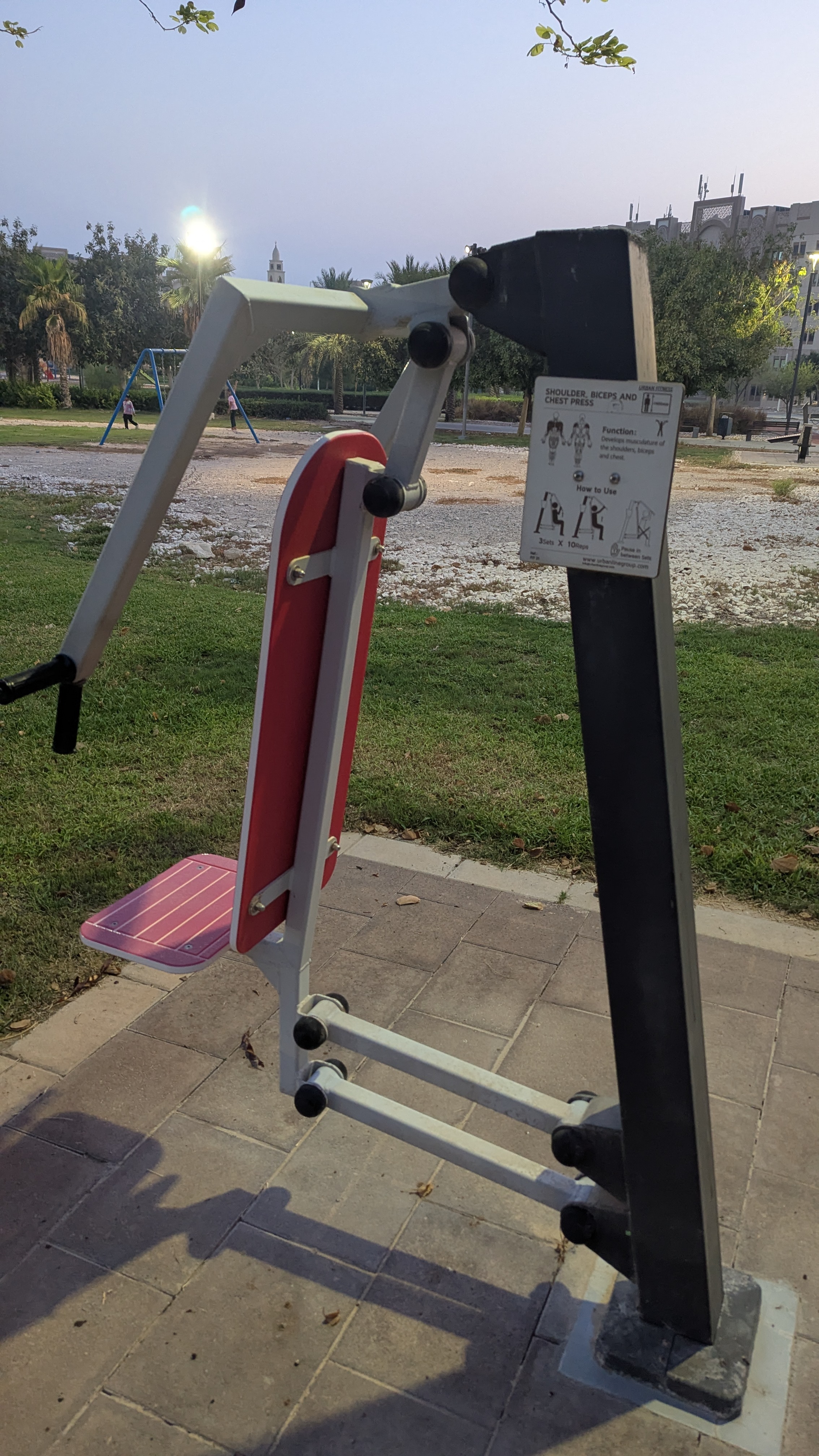
None of it is flashy. That's what I liked about it. It tells you that someone thought about everyday life, not just the impressive parts.
4. Speed and scale
The roads are the opposite of quiet. The highway from the airport to Al Dhannah had a speed limit of 160 km/h for cars and 120 km/h for trucks. If you love driving, you'll love it here. And if you love cars, this is a place to spot them. There are SUVs everywhere, and big ones.
The drive took about two hours, and everything around me seemed built for distance and space.
5. A country that manages everything
Even the rain here is managed. The process is called cloud seeding, and it's run by the UAE's National Centre of Meteorology (NCM). The UAE is dry, so NCM aircraft fly into suitable clouds and release salt particles to help them produce more rain. Studies suggest it can raise rainfall by roughly 10-25% in good conditions, and it only works on clouds that are already there. I first thought it was about making the heat bearable, but it's really about water security.
Parking works on the same logic. In Abu Dhabi, the paid parking system is called Mawaqif. You park, pay for the time you need by SMS or through the Darb app, and extend it from your phone if you run late. It's paid from 8 am to midnight, Monday to Saturday, and free on Sundays and public holidays. A parking spot is a limited thing, so it's priced by the hour. I don't often see this at home, and it made me realise how much of this country runs on a simple idea. If something is scarce, measure it and manage it.
6. Cheap gold, low tax: what's actually going on?
Gold is cheaper here, and I wanted to know why. The metal costs the same everywhere in the world. What changes is the tax. In India, a recent hike pushed the import duty on gold to 15% (previously 6%), and 3% GST comes on top. In the UAE, jewellery carries 5% VAT, and tourists can claim most of it back. So a big part of "cheap gold in Dubai" is really "expensive gold at home."
That gap is also why people try to carry gold back. India does allow some jewellery duty-free, 20 grams for men and 40 grams for women.
The UAE doesn't tax salaries, but it isn't tax-free either. There's a 5% VAT on most purchases, and in recent years a corporate tax was added. As far as I understand, it works because the state earns from places other than your paycheque, mainly oil, trade, and state-run businesses. And you as a tourist can get that 5% VAT return when you leave the country within a specific period of time.
Back home, we pay income tax and expect the state to deliver in return. Here the deal is different: less tax, fewer questions, and a country that's very clearly run. I'm not sure which deal is better: a country running by a ruler or by government but I think both has its pros & cons.
7. Seven emirates, one country
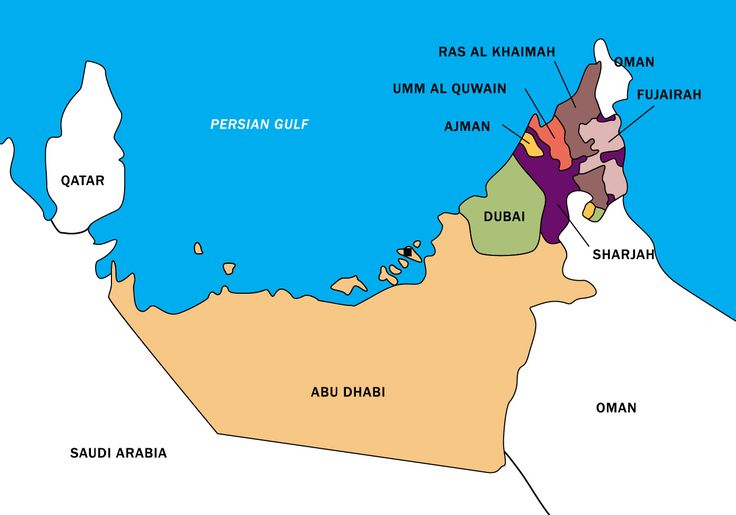
The UAE isn't one big state. It's a federation of seven emirates: Abu Dhabi, Dubai, Sharjah, Ajman, Umm Al Quwain, Ras Al Khaimah, and Fujairah. You can think of them like Indian states, except each emirate has its own hereditary ruler instead of an elected government.
Abu Dhabi is by far the biggest, covering more than three-quarters of the country's land, and it holds most of the oil. It's also the capital. Dubai is the one the world knows better (maybe because of the concrete jungle).
By tradition, the ruler of Abu Dhabi is the president of the UAE. But the president is chosen by a council of all seven rulers, and big decisions need five of the seven votes, including both Abu Dhabi and Dubai. So Abu Dhabi leads, but it can't decide alone.
8. Small things I noticed
- Food: I tried khaboos (also spelled khubz), the local flatbread. It's like naan, but its own thing.
- Animals: I didn't see a single stray dog on the street. There were cats, though, and they seemed completely at home.
- Driving: I hardly heard a horn. The roads are quiet, and drivers usually let others go ahead of them. I rarely see that in India.
- Petrol: Fuel prices have been rising because of the regional war. They went up in August, September and again in October, when Super 98 reached AED 4.40 a litre, about ₹115. Petrol in Ahmedabad is around ₹102. Water, on the other hand, costs about the same as back home.
- Dubai Mall: It's one of the biggest malls I've seen, with almost every brand you can name. Digital maps help you find your way around around inside the mall, and delivery riders run through it all day.
9. What I'm taking back home
Three things. First, small rules, followed by everyone, change how a city feels. Second, public spaces say a lot about what a place values. Third, whenever something looks "cheap" or "free," it's worth asking who is paying for it and how.
"The real voyage of discovery consists not in seeking new landscapes, but in having new eyes."
— Marcel Proust
Travelling changes your perspective of the world. This was only my first trip abroad, and I'm already seeing home differently. See you in the next one : )